
Bio-Individual Reference Ranges in Functional Blood Chemistry Analysis
From population-based ranges, to functional insight, to truly personalized interpretation.

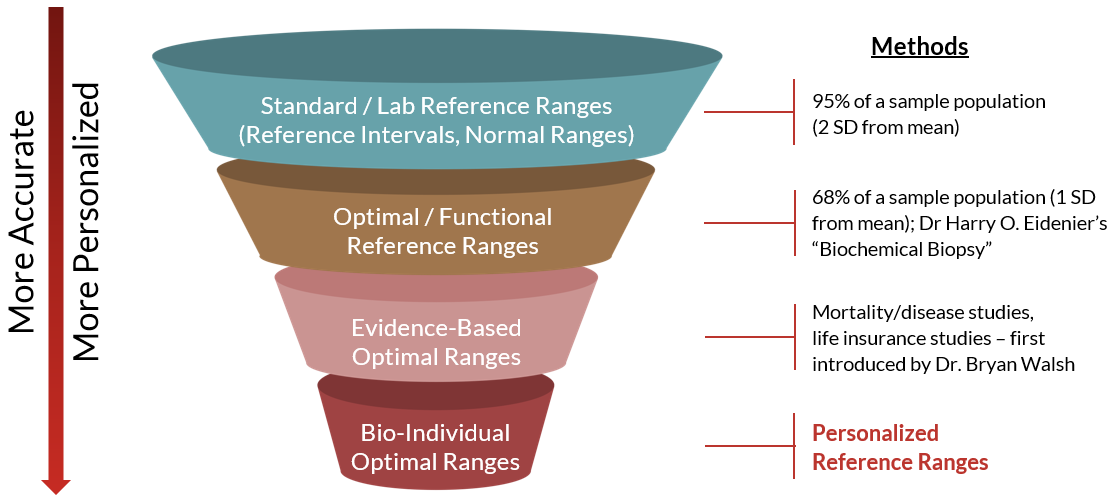
Functional blood chemistry analysis goes beyond standard lab reference ranges by defining functional or optimal ranges that reflect physiological balance rather than statistical norms.
Bio-individual reference ranges take this analysis further by dynamically adjusting ranges based on the client’s physiology, including age, sex, elevation, pregnancy trimester, and more, to reflect how biology actually changes across different physiological states.
This approach provides the most accurate interpretive framework available, supporting truly personalized care, clearer pattern recognition, and more confident clinical decision making.
Why Standard Reference Ranges Miss Clinical Context
Standard laboratory reference ranges are derived from large population datasets and are designed to identify overt pathology. They do not account for the wide variability in normal human physiology.
As a result, values may fall within range while still reflecting imbalance, adaptation, or early dysfunction. Interpretation based solely on population ranges increases the risk of missed patterns, delayed insight, and unnecessary clinical uncertainty.
Functional interpretation requires reference ranges that reflect who the value belongs to, not just where it falls statistically.
Physiology Is Dynamic Across the Lifespan
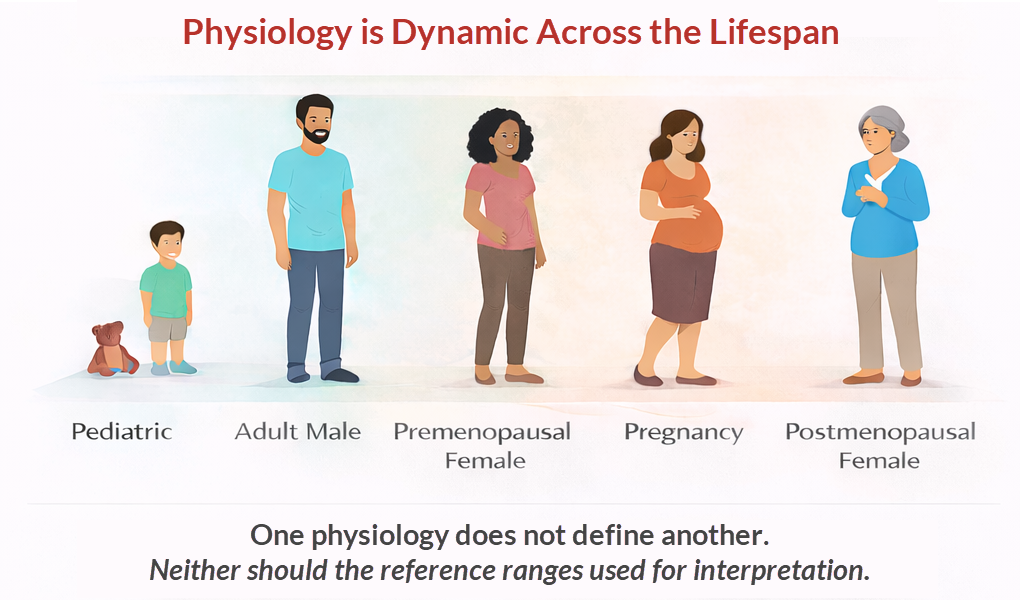
Blood chemistry is dynamic and responsive to physiological context.
Age, sex, reproductive status, and adaptive demands all influence how laboratory values should be interpreted.
Bio-individual reference ranges account for:
- Age-related physiological shifts
- Sex-specific differences in metabolic and hematologic markers
- Pregnancy and trimester-driven adaptations
- Postmenopausal physiological changes
- Normal adaptive responses to stress and life-stage transitions
Using a single static reference range across these states increases the risk of misinterpretation.
How Bio-Individual Reference Ranges Change Clinical Interpretation
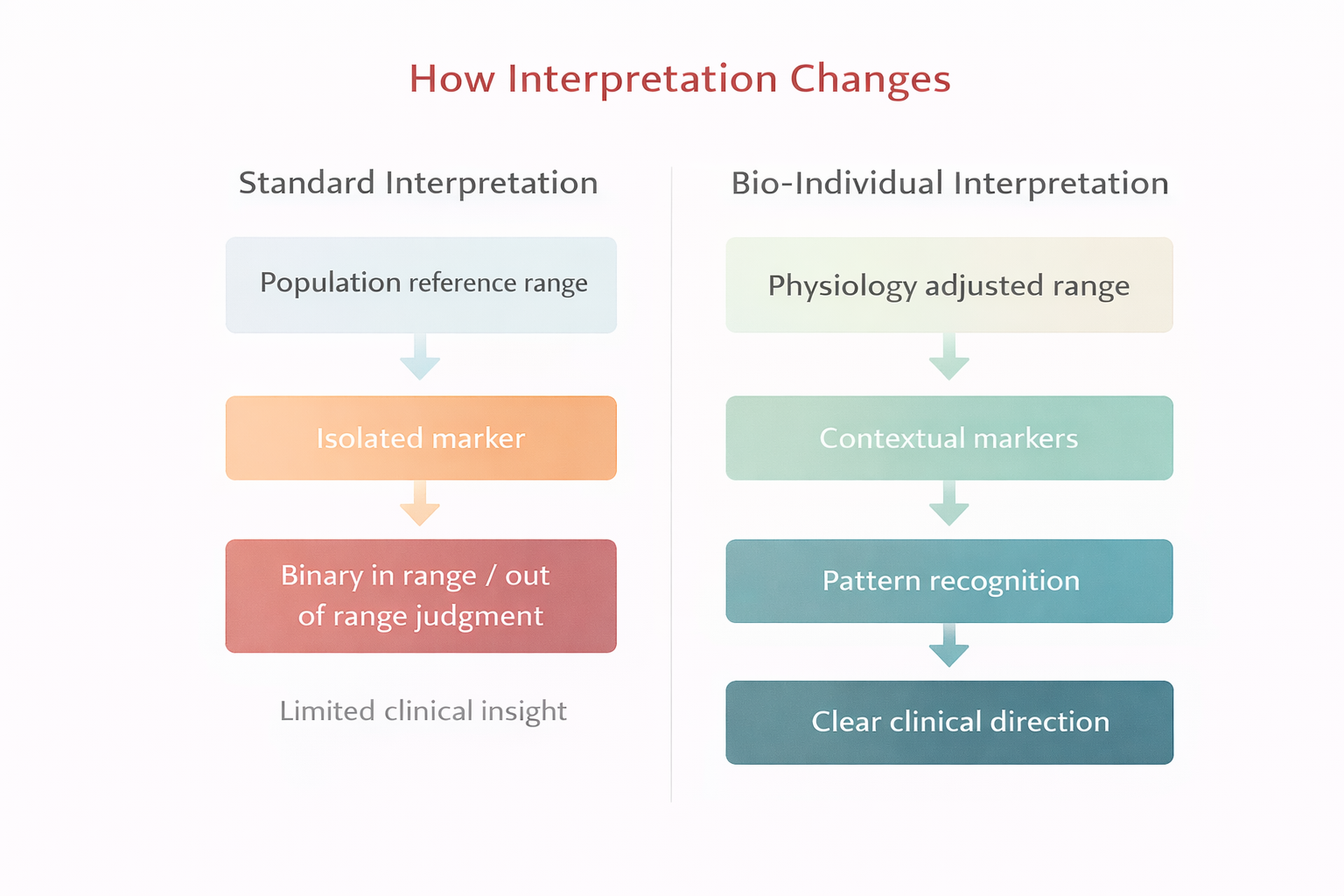
Applying bio-individual reference ranges shifts interpretation from isolated markers to meaningful patterns.
This approach allows practitioners to:
- Identify subtle dysfunction earlier
- Differentiate adaptation from pathology
- Reduce unnecessary over-pathologizing
- Recognize clinically relevant trends over time
- Communicate findings with greater clarity and confidence
Bio-individual reference ranges provide a more refined lens through which blood work can be understood.
How LabSmarts Applies Bio-Individual Reference Ranges
Reference ranges are applied automatically based on available physiological information, including age, sex, and life stage, and adjust dynamically within the analysis workflow.
This allows practitioners to focus on interpretation rather than manual calculations, supporting consistency, efficiency, and clinical accuracy while preserving practitioner judgment.
Apply Bio-Individual Precision to Your Blood Work Interpretation
Bio-individual reference ranges bring context, clarity, and precision to functional blood chemistry analysis.
Explore how LabSmarts supports accurate interpretation without over-simplification or over-pathologizing.