A 48-year-old man presented for routine blood work ordered by his physician. He was significantly underweight, struggled with anxiety, experienced poor sleep, and reported an unusually low appetite. He felt depleted and frustrated. His doctor reassured him that his labs were “fine” and suggested he simply improve his diet.
But something did not add up.
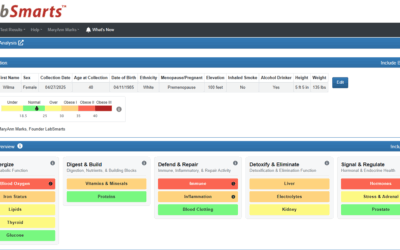
When his labs were evaluated using functional blood chemistry analysis inside LabSmarts, a subtle but powerful physiologic pattern emerged, one that conventional interpretation had overlooked entirely.
The Limits of Conventional Lab Review
On paper, his labs appeared unremarkable:
AST within conventional range
ALT slightly above optimal but not flagged
GGT borderline
Mild irregularities in red and white blood cell markers
On the surface, there was nothing alarming, nothing urgent. And frustratingly, nothing that explained why he felt so unwell.
This is where functional blood chemistry analysis becomes essential. Rather than viewing markers individually, it evaluates patterns across systems to detect physiologic stress before overt disease develops.
The Red Blood Cell Pattern That Changed Everything
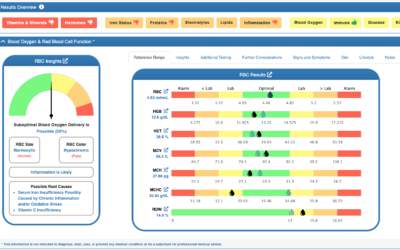
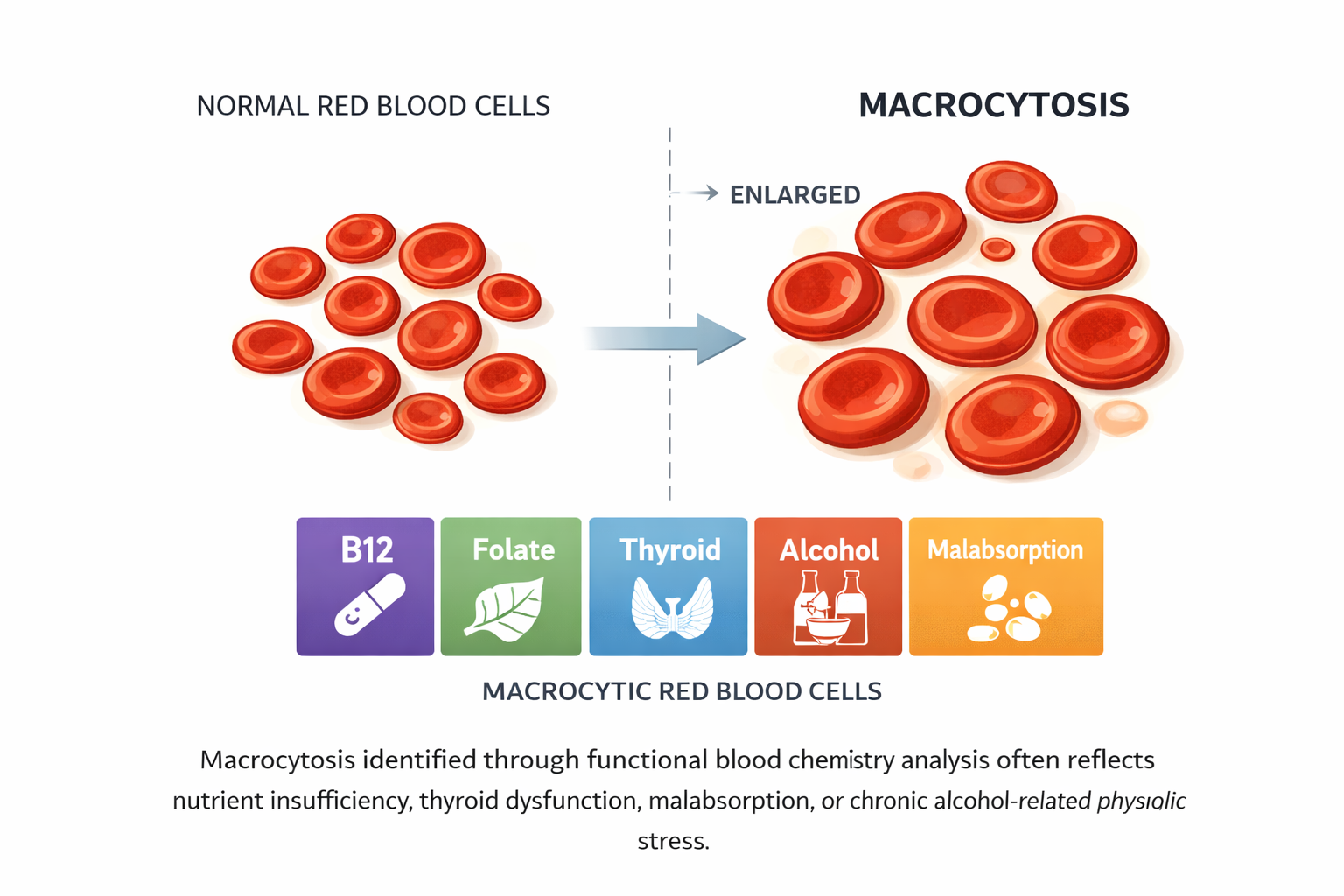
LabSmarts identified macrocytosis, enlarged red blood cells.
Macrocytosis in functional blood chemistry analysis can indicate:
Vitamin B12 insufficiency
Folate insufficiency
Thyroid hormone insufficiency
Malabsorption
Chronic alcohol exposure
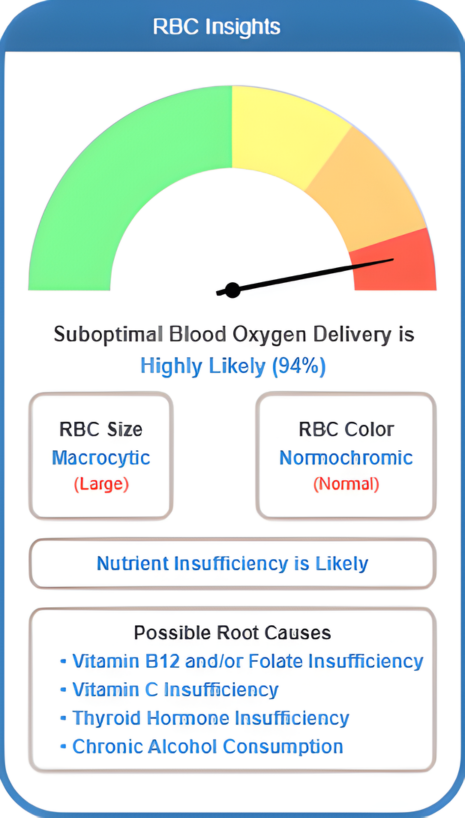
Because this client reported under-eating, nutrient deficiency seemed plausible. But LabSmarts detected a specific pattern consistent with chronic alcohol stress, even though liver enzymes were not significantly elevated.
That insight shifted the clinical direction immediately.
When asked directly about alcohol use, the client paused and admitted he had a history of heavy drinking. He had not mentioned it earlier because he did not think it was relevant.
Without functional blood chemistry analysis, that conversation may never have happened.
Why Red Blood Cell Morphology Matters
One of the most powerful principles in functional blood chemistry analysis is that structural changes in red blood cells often precede dramatic enzyme elevations.
In this case:
AST did not strongly suggest alcohol damage
ALT was only mildly elevated
GGT was borderline
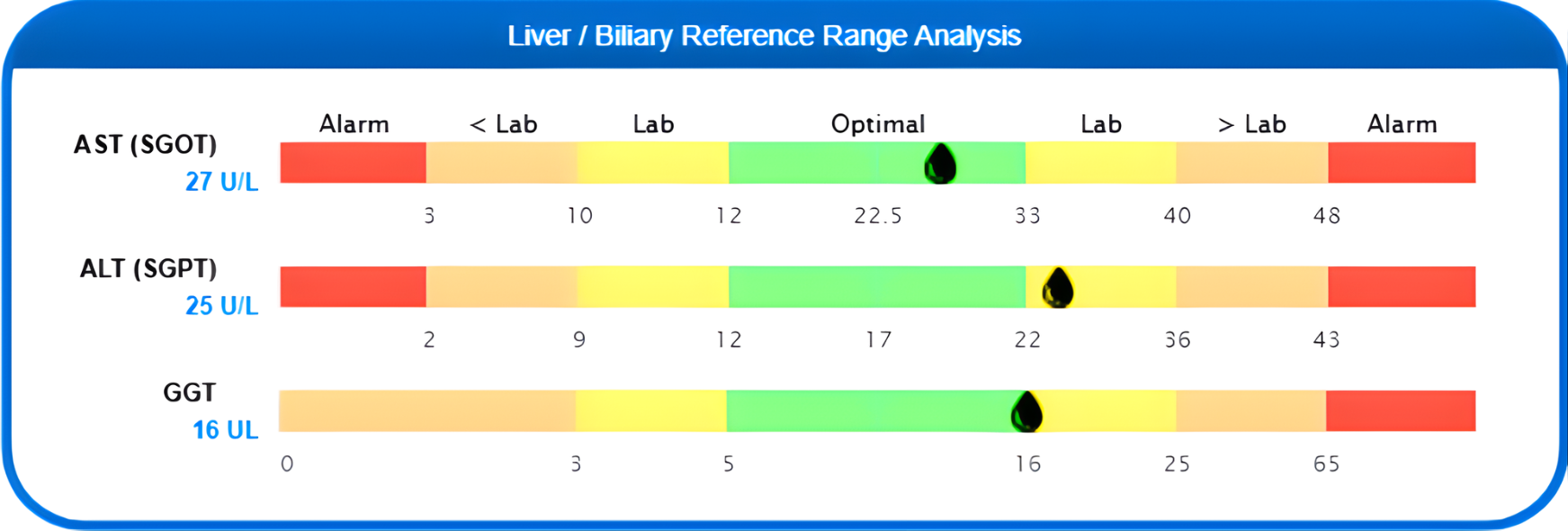
LabSmarts’ analysis of red blood cell morphology patterns revealed chronic physiologic stress.
Conventional lab interpretation missed it, but pattern recognition did not.
Immune Signals Beneath the Surface
The story does not end there.
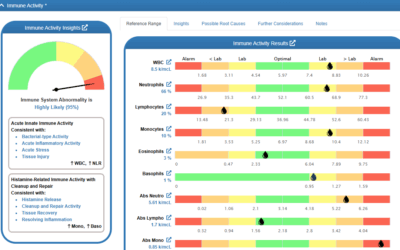
The white blood cell analysis revealed:
Mildly elevated total white blood cell count
Significantly elevated monocytes
A pattern consistent with immune activation
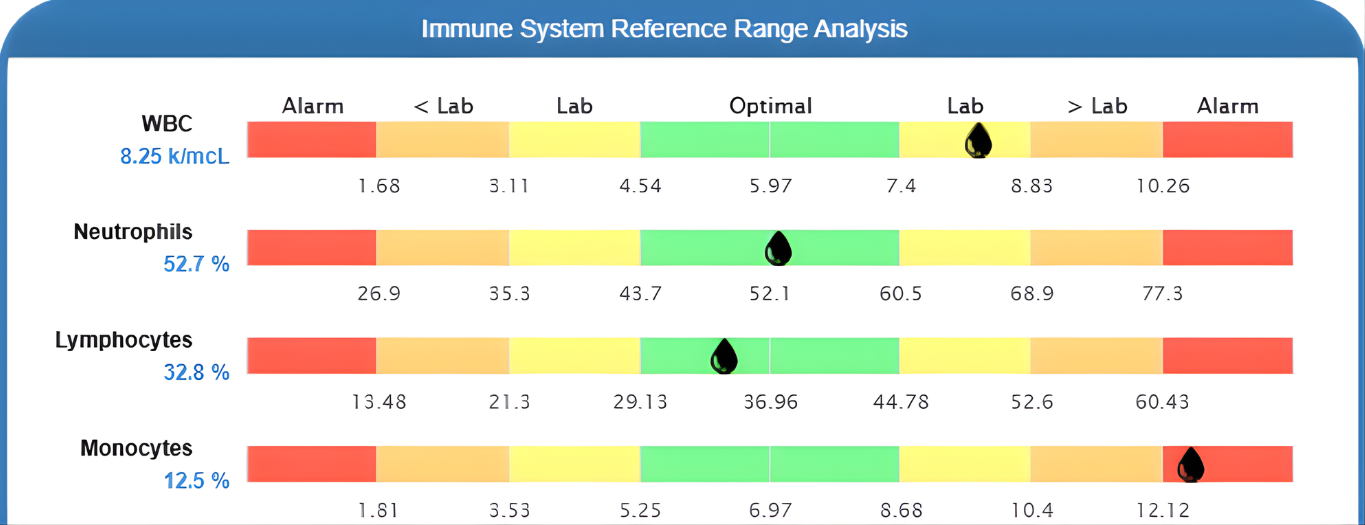
The client reported skin candida overgrowth and heavy reliance on sugar-sweetened beverages to compensate for low appetite. This combination suggested:
Immune imbalance
Possible gut dysbiosis
Inflammatory disruption from high simple sugar intake
Again, no single marker screamed pathology. But together, the pattern told a coherent physiologic story.
This is the power of functional blood chemistry analysis. It connects the dots before disease becomes obvious.
The Emotional Turning Point
The most significant moment in this case was not a lab value. It was a conversation. And on an even deeper level, it reveals how the objective story told by nuanced analysis of blood work can help break barriers of shame and silence in the clinical setting, allowing real change to take place.
Once the client felt safe in acknowledging his alcohol use history, the clinical picture shifted from “just eat more” to understanding chronic physiologic stress, nutrient depletion risk, and immune dysregulation.
The client felt seen, not dismissed, and not judged.
That is the difference between routine lab review and true functional blood chemistry analysis.
What This Case Teaches Practitioners
This case highlights several core principles:
- Markers within conventional ranges can still reveal dysfunction when evaluated as patterns.
- Red blood cell morphology can detect chronic stress earlier than liver enzymes.
- Functional blood chemistry analysis prompts better clinical questions.
- Subtle patterns can uncover hidden contributors clients may not disclose.
- Context-driven interpretation changes outcomes.
When you evaluate labs through a functional blood chemistry analysis framework, you are not just reviewing numbers. You are identifying early physiologic shifts and preventing long-term dysfunction.
Why Pattern Recognition Changes Clinical Trajectory
If this lab work had been reviewed traditionally, the conclusion might have been:
“Everything looks fine. Improve your diet.”
Instead, functional blood chemistry analysis revealed:
Chronic alcohol-related physiologic stress
Nutrient depletion risk
Immune imbalance
Oxidative stress patterns
The clinical plan changes dramatically when you identify root drivers early.
Elevating Practitioner Precision with Functional Blood Chemistry Analysis
LabSmarts was built to support practitioners who want deeper insight without spending hours manually cross-referencing markers and research.
By integrating:
Bio-individual reference ranges
Multi-marker pattern recognition
System-level interpretation
Functional blood chemistry analysis becomes precise, efficient, and actionable.
This case demonstrates that the most important insights are often the least obvious, until you evaluate the full physiologic pattern.